The two camps
Ordinary language philosophy flourished at Oxford in the 1940s under Austin and Ryle and declined rapidly in the late 1960s; Russell, by contrast, had dismissed ordinary language as too confused to help solve philosophical problems. Strawson’s “On Referring” (1950) criticised Russell’s theory of descriptions, and Austin’s Sense and Sensibilia criticised Ayer’s sense-data theory, to which Ayer replied. Russell decried the influence of the later Wittgenstein and of the “Oxford school”, and wrote an approving foreword to Ernest Gellner’s Words and Things (1959), a fierce critique of Austin, Ryle, Strawson and others; when Ryle refused to have it reviewed in Mind, Russell protested in a letter to The Times, and a long correspondence followed.
In our words.
A. The ordinary language philosophers
Placed at the average of these 3 people. Their school on this site: Ordinary Language Philosophy.
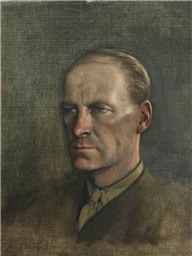 Gilbert Ryle1900–1976
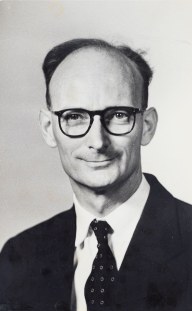 J. L. Austin1911–1960
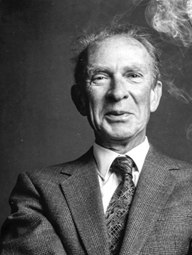 P. F. Strawson1919–2006
B. Their critics
Placed at the average of these 2 people.
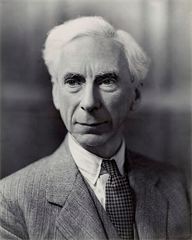 Bertrand Russell1872–1970
 A. J. Ayer1910–1989
Where they part ways
Each scale both camps have a position on, the biggest gap first.
The ordinary language philosophersTheir critics
The big letters are each camp's average; the small dots are its members (filled: The ordinary language philosophers, open: Their critics). A camp whose members are far apart on a scale is marked split.
Your side
Take the quiz to see which camp you would have joined.
Sources
Where each camp comes from: the exact words on each page.
Ordinary language analysis largely flourished and developed at Oxford University in the 1940s, under Austin and Ryle, and was quite widespread for a time before declining rapidly in popularity in the late 1960s
wikipedia.orgThis Oxford group also included H. L. A. Hart, Geoffrey Warnock, J. O. Urmson and P. F. Strawson
wikipedia.orgBertrand Russell tended to dismiss language as being of little philosophical significance, and ordinary language as just too confused to help solve metaphysical and epistemological problems
wikipedia.orgStrawson first became well known with his article ‘On Referring’ (1950), a criticism of Bertrand Russell’s theory of descriptions
wikipedia.orgAyer’s sense-data theory in Foundations of Empirical Knowledge was famously criticised by fellow Oxonian J. L. Austin in Sense and Sensibilia, a landmark 1950s work of ordinary language philosophy. Ayer responded
wikipedia.orgIn Russell’s opinion, Wittgenstein’s later work was misguided, and he decried its influence and that of its followers (especially members of the so-called ‘Oxford school’ of ordinary language philosophy
wikipedia.orgHis first book, Words and Things (1959)
wikipedia.orgWords and Things is fiercely critical of the work of Ludwig Wittgenstein, J. L. Austin, Gilbert Ryle, Antony Flew, P. F. Strawson and many others. Ryle refused to have the book reviewed in the philosophical journal Mind (which he edited), and Bertrand Russell (who had written an approving foreword) protested in a letter to The Times
wikipedia.orgA response from Ryle and a lengthy correspondence ensued
wikipedia.org
And you, where do you stand?
Take the quiz and see which side of Ordinary language philosophers or their critics you are on.
Take the quiz