The two camps
The Legalists saw most people as self-interested and wanted pragmatic, results-driven government with equality under the law; this put them at odds with the Confucians, who held that cultivated virtue is the main way to build a well-governed state. Han Fei and Li Si had studied under the Confucian Xunzi. Scholars note that it is unlikely anyone then called themselves a Legalist school.
In our words.
A. The Confucians
Placed at the average of these 2 people. Their school on this site: Confucianism.
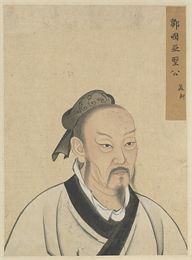 Menciusc. 371–289 BC
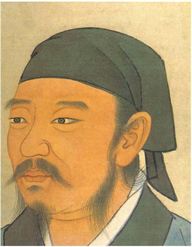 Xunzic. 310–238 BC
B. The Legalists
Placed at the average of these 3 people. Their school on this site: Legalism.
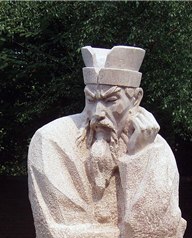 Shang Yangc. 390–338 BC
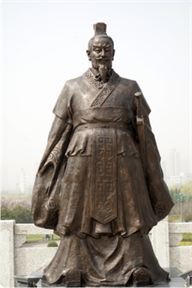 Han Feic. 280–233 BC
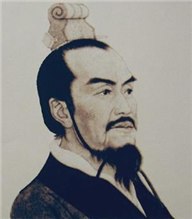 Li Sic. 280–208 BC
Where they part ways
Each scale both camps have a position on, the biggest gap first.
The ConfuciansThe Legalists
The big letters are each camp's average; the small dots are its members (filled: The Confucians, open: The Legalists). A camp whose members are far apart on a scale is marked split.
Your side
Take the quiz to see which camp you would have joined.
Sources
Where each camp comes from: the exact words on each page.
often ranked as the third great Confucian philosopher of antiquity after his predecessors Confucius and Mencius
wikipedia.orgLegalist doctrine was formulated by Li Kui, Shang Yang
wikipedia.orgSome legalist thinkers, such as Han Fei (considered by many to be the greatest Legalist thinker)
wikipedia.orgThe impact of the fa tradition is visible in memorials of early imperial statesmen, most notably of the man who is considered the architect of the Qin Empire (221-207 BCE), Li Si
plato.stanford.eduthe Legalists generally shared a view of most people-or at least the elite-as fundamentally self-interested, emphasizing equality under the law
wikipedia.orgThe Legalist emphasis on pragmatic, results-driven governance put them at odds with the Confucians, who advocated for cultivated virtue as a primary method of building a well-governed state
wikipedia.orgLiang Qichao identified the difference between the fa thinkers and their Confucian rivals as the dichotomy between the rule of fa
plato.stanford.eduHan Fei particularly detests the moralizers-followers of Confucius and Mozi-who mislead the rulers with their arguments
plato.stanford.eduHan Fei studied together with future Qin chancellor Li Si under the Confucian philosopher Xun Kuang
wikipedia.orgCriticized as ‘obsessed by fa (laws and models)’ by his late Warring States Confucian Jixia Academy successor Xun Kuang, Shen Dao
wikipedia.orgit is unlikely anyone politically identified themselves as a ‘ fa ’, or legalist, school
wikipedia.orgIn 213 BCE, after heated court debates, Li Si launched a comprehensive assault on ‘private learning,’
plato.stanford.eduLi Si’s assault on private learning is often misinterpreted as the victory of ‘Legalist’ over ‘Confucian’ ideology, but this is wrong
plato.stanford.eduShang Yang 商鞅 (d. 338 BCE)
plato.stanford.edu
And you, where do you stand?
Take the quiz and see which side of Confucians or Legalists you are on.
Take the quiz