4 members on this site
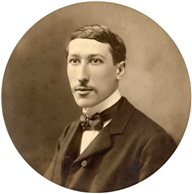 René Guénon1886–1951 · PerennialismYears not recorded
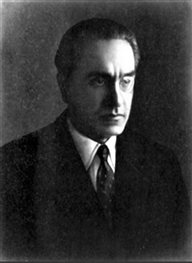 Julius Evola1898–1974 · PerennialismYears not recordedput action above contemplation, unlike Guénon
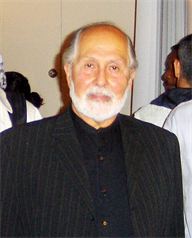 Seyyed Hossein Nasrborn 1933 · PerennialismStill part of it
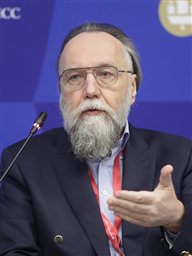 Aleksandr Duginborn 1962Years not recorded
Where the circle leans
Spirit or matterVery strong · Spirit
Spirit 94%Matter 6%
Facts: subjective or objectiveVery strong · Objective
Subjective 7%Objective 93%
Values: subjective or objectiveVery strong · Objective
Subjective 5%Objective 95%
Reason or experienceStrong · Reason
Reason 80%Experience 20%
Separate from the highest, or one with itVery strong · All is one
Separate 12%All is one 88%
Inner life: real, or explained away by the brainVery strong · Mind is real
Mind is real 87%Mind explained away 13%
Life: meaning, or none at allVery strong · Life has meaning
Life has meaning 90%No meaning at all 10%
The way to the highest: own effort, or graceLeaning · By my own effort
By my own effort 61%By grace 39%
Knowledge: we can know, or suspend judgmentStrong · We can know
We can know 83%Suspend judgment 17%
The average of its members on each scale where two or more of them have a position and they roughly agree. Left out because the members split: God: exists, or not (Seyyed Hossein Nasr toward God existing, Julius Evola toward no God).
Side by side with you
Black dot: the circle, at the average of its members. Red ring: you.
On the maps
Each map puts two scales side by side. Each small square is a school, at its exact spot; its name shows where there is room. For the others, point at the square, or tap it once on a phone. Click a school, or tap it again, to open it.
Swipe sideways to see the whole chart.
Closest circles
Sources
Where the list of members comes from: the exact words on each page.
Historian Mark Sedgwick identifies René Guénon, Ananda Coomaraswamy, Frithjof Schuon, Seyyed Hossein Nasr, Julius Evola, Mircea Eliade, and Alexandr Dugin to be the seven most prominent Traditionalists
wikipedia.orgOriginating in the thought of René Guénon in the 20th century, it proposes that a single primordial, metaphysical truth forms the source for, and is shared by, all the major world religions
wikipedia.orgTraditionalists often contrast ‘tradition’ to ‘ modernity ’
wikipedia.orgDespite being seen as the founder of Traditionalism, Guénon rejected the label and referred to himself only as a perennialist
wikipedia.orgGuénon, whom Evola called his ‘master’
wikipedia.orgthough he diverged from Guénon by valuing action over contemplation, and the empire over the church
wikipedia.orgThese range from the environmentalism of Nasr
wikipedia.orgto the far-right politics of Evola, Eliade and Dugin
wikipedia.orgscholars dispute whether, or to what extent, these views can actually be reconciled to Traditionalist thought
wikipedia.orgAldous Huxley, who popularized the term ‘perennial philosophy’ in his 1945 book, had a mystical universalist perspective distinct from that of the Traditionalist School
wikipedia.orgof the living traditionalists the most widely known in academic circles
wikipedia.orgIn 1930, Guénon left Paris for Cairo
wikipedia.org
And you, where do you stand?
Take the quiz and see your match with The Traditionalist School and the other circles.
Take the quiz