4 members on this site
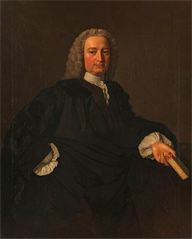 Francis Hutcheson1694–1746 · Moral Sense TheoryPart of it from 1729 · until death
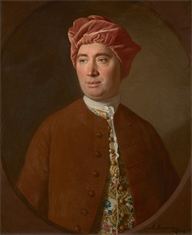 David Hume1711–1776 · HumeanismPart of it from 1738 · end not recorded
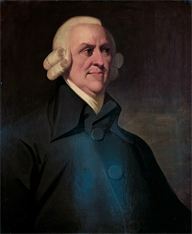 Adam Smith1723–1790 · Moral Sense TheoryPart of it from 1752 · end not recorded
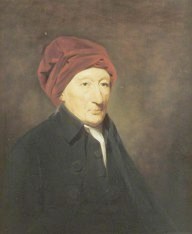 Thomas Reid1710–1796 · Common Sense RealismPart of it from 1764 · end not recorded
Where the circle leans
The average of its members on each scale where two or more of them have a position and they roughly agree. Left out because the members split: inner life: real, or explained away by the brain (Thomas Reid toward the mind being real, David Hume toward the mind being explained away); other minds: surely real, or only my own is sure (Thomas Reid toward other minds surely being real, David Hume toward only one's own mind being sure); the good life: pleasure, or virtue and duty (Francis Hutcheson toward pleasure as the good, Thomas Reid toward virtue and duty); what makes an act right: principles, or consequences (Thomas Reid toward principles, Francis Hutcheson toward consequences); method: logic and analysis, or lived experience (David Hume toward logic and analysis, Adam Smith toward lived experience).
Side by side with you
Black dot: the circle, at the average of its members. Red ring: you.
On the maps
Each map puts two scales side by side. Each small square is a school, at its exact spot; its name shows where there is room. For the others, point at the square, or tap it once on a phone. Click a school, or tap it again, to open it.
Swipe sideways to see the whole chart.
Closest circles
Sources
Where the list of members comes from: the exact words on each page.
was the period in 18th- and early-19th-century Scotland characterised by an outpouring of intellectual and scientific accomplishments
wikipedia.orgAmong the Scottish thinkers and scientists of the period were Joseph Black, James Boswell, Robert Burns, William Cullen, Adam Ferguson, David Hume, Francis Hutcheson, James Hutton, Lord Monboddo, John Playfair, Thomas Reid, Adam Smith, and Dugald Stewart
wikipedia.orgOther clubs in Edinburgh included The Select Society, formed by the younger Allan Ramsay, a prominent artist, and philosophers David Hume and Adam Smith
wikipedia.orgThe first major philosopher of the Scottish Enlightenment was Francis Hutcheson (1694–1746), who was professor of moral philosophy at Glasgow from 1729 to 1746
wikipedia.orgIn contrast to Hume, Thomas Reid (1710–96), a student of Turnbull’s, along with minister George Campbell (1719–96) and writer and moralist James Beattie (1735–1803), formulated Common Sense Realism
wikipedia.org
And you, where do you stand?
Take the quiz and see your match with The Scottish Enlightenment and the other circles.
Take the quiz