10 members on this site
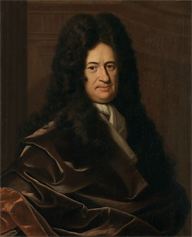 Gottfried Wilhelm Leibniz1646–1716 · RationalismThere from 1700 · until death
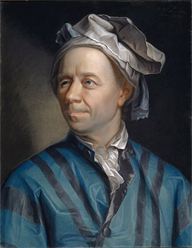 Leonhard Euler1707–1783There 1741–1766 · moved onwent back to the St Petersburg academy
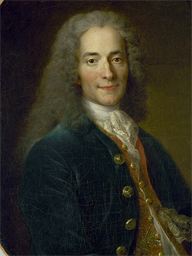 Voltaire1694–1778 · DeismThere from c. 1750 · broke with itleft Berlin after satirising Academy president Maupertuis
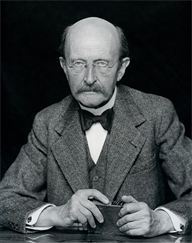 Max Planck1858–1947There from 1894 · until it endedresigned as president in 1938 in protest at Nazi control
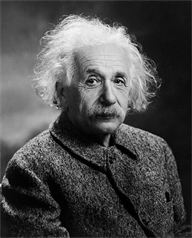 Albert Einstein1879–1955 · SpinozismThere 1914–1933 · moved on
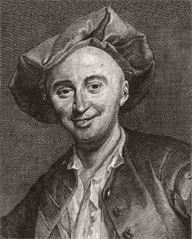 Julien Offray de La Mettrie1709–1751 · MechanismThere from 1748 · end not recorded
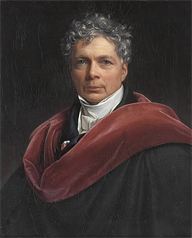 Friedrich Wilhelm Joseph Schelling1775–1854 · IdealismThere from 1841 · until death
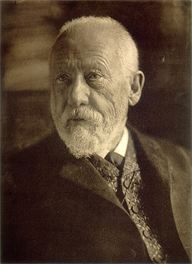 Wilhelm Dilthey1833–1911 · HermeneuticsThere from 1887 · end not recorded
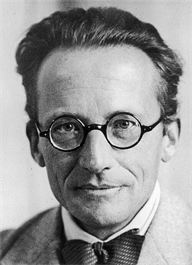 Erwin Schrödinger1887–1961 · Advaita VedantaYears not recorded
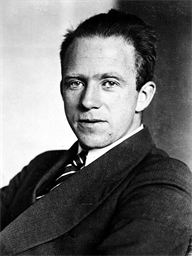 Werner Heisenberg1901–1976There from 1943 · end not recorded
Where the circle leans
The average of its members on each scale where two or more of them have a position and they roughly agree. Left out because the members split: spirit or matter (Gottfried Wilhelm Leibniz toward spirit, Julien Offray de La Mettrie toward matter); values: subjective or objective (Julien Offray de La Mettrie toward subjective, Gottfried Wilhelm Leibniz toward objective); free will or determinism (Friedrich Wilhelm Joseph Schelling toward free will, Julien Offray de La Mettrie toward determinism); reason or experience (Gottfried Wilhelm Leibniz toward reason, Julien Offray de La Mettrie toward experience); separate from the highest, or one with it (Voltaire toward being separate, Erwin Schrödinger toward all being one); the good life: pleasure, or virtue and duty (Julien Offray de La Mettrie toward pleasure as the good, Albert Einstein toward virtue and duty); God: exists, or not (Gottfried Wilhelm Leibniz toward God existing, Julien Offray de La Mettrie toward no God); universals: real, or only particular things (Werner Heisenberg toward universals being real, Gottfried Wilhelm Leibniz toward only particular things existing); method: logic and analysis, or lived experience (Gottfried Wilhelm Leibniz toward logic and analysis, Wilhelm Dilthey toward lived experience).
Side by side with you
Black dot: the circle, at the average of its members. Red ring: you.
On the maps
Each map puts two scales side by side. Each small square is a school, at its exact spot; its name shows where there is room. For the others, point at the square, or tap it once on a phone. Click a school, or tap it again, to open it.
Swipe sideways to see the whole chart.
Closest circles
Sources
Where the list of members comes from: the exact words on each page.
College in Berlin from 1700 to 1946
wikipedia.orgupon the advice of Gottfried Wilhelm Leibniz, who was appointed president
wikipedia.orgGottfried Wilhelm Leibniz, founding president 1700
wikipedia.orgFrederick made French the official language and speculative philosophy the most important topic of study
wikipedia.orgFrederick invited Joseph-Louis Lagrange to succeed Leonhard Euler as director
wikipedia.orgLeonhard Euler 1741–1766
wikipedia.orgVoltaire, c. 1750
wikipedia.orgMax Planck, proper member 1894
wikipedia.orgAlbert Einstein, proper member 1914
wikipedia.orgOn 25 November 1915 Albert Einstein presented his field equations of general relativity to the Academy
wikipedia.orgMembers of the Prussian Academy of Sciences
wikipedia.orgSchelling’s appointment as Prussian privy councillor and member of the Berlin Academy
wikipedia.orgMitglied der Preußischen Akademie der Wissenschaften
de.wikipedia.orgMitglied der Preußischen Akademie der Wissenschaften
de.wikipedia.orghis election to the Preußische Akademie der Wissenschaften ( Prussian Academy of Sciences ) was approved
wikipedia.org
And you, where do you stand?
Take the quiz and see your match with The Prussian Academy of Sciences and the other circles.
Take the quiz