6 members on this site
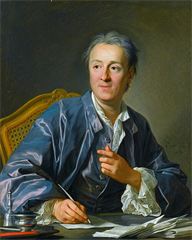 Denis Diderot1713–1784Part of it from 1747 · until it ended
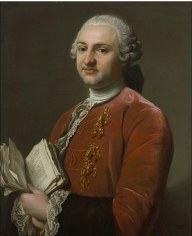 Baron d'Holbach1723–1789 · Hard DeterminismPart of it from 1751 · end not recorded
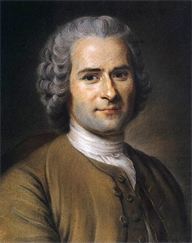 Jean-Jacques Rousseau1712–1778 · ContractarianismPart of it 1749–1758 · broke with itbroke with them in his 1758 Letter to d’Alembert
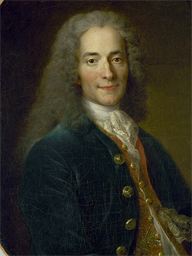 Voltaire1694–1778 · DeismPart of it from 1755 · end not recorded
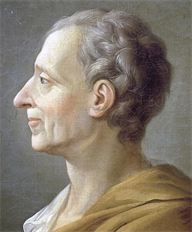 Montesquieu1689–1755 · Classical liberalismYears not recorded
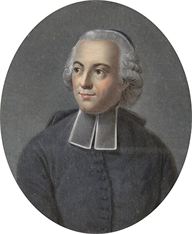 Étienne Bonnot de Condillac1714–1780 · EmpiricismPart of it from 1746 · end not recorded
Where the circle leans
The average of its members on each scale where two or more of them have a position and they roughly agree. Left out because the members split: spirit or matter (Jean-Jacques Rousseau toward spirit, Baron d'Holbach toward matter); free will or determinism (Jean-Jacques Rousseau toward free will, Baron d'Holbach toward determinism); inner life: real, or explained away by the brain (Étienne Bonnot de Condillac toward the mind being real, Baron d'Holbach toward the mind being explained away); the good life: pleasure, or virtue and duty (Voltaire toward pleasure as the good, Denis Diderot toward virtue and duty); God: exists, or not (Étienne Bonnot de Condillac toward God existing, Baron d'Holbach toward no God).
Side by side with you
Black dot: the circle, at the average of its members. Red ring: you.
On the maps
Each map puts two scales side by side. Each small square is a school, at its exact spot; its name shows where there is room. For the others, point at the square, or tap it once on a phone. Click a school, or tap it again, to open it.
Swipe sideways to see the whole chart.
Closest circles
Sources
Where the list of members comes from: the exact words on each page.
were contributors to the Encyclopédie, the first encyclopedia with signed contributions from numerous collaborators
wikipedia.orgGeneral encyclopedia published in France from 1751 to 1772
wikipedia.orgco-edited by Denis Diderot and Jean le Rond d’Alembert from 1747 to 1758, and edited by Diderot alone through 1772
wikipedia.orgdepicts several of the Encyclopédistes, including Condorcet, d’Alembert, Diderot, and Voltaire
wikipedia.orgAntoine Louis Baron d’Holbach Louis de Jaucourt
wikipedia.orgCharles de Secondat, Baron de Montesquieu Adrien Quiret de Margency Jean-Baptiste-Pierre le Romain Jean-Jacques Rousseau
wikipedia.orgSuzanne Verdier Voltaire Claude Yvon
wikipedia.orgwere not a unified group, neither in ideology nor social class
wikipedia.orgmany of the authors belonged to the vaguely defined intellectual group known as the philosophes
wikipedia.orgthey promoted the advancement of science and secular thought and supported the tolerance, rationality, and open-mindedness of the Enlightenment
wikipedia.orgContributors to the Encyclopédie (1751–1772)
wikipedia.org
And you, where do you stand?
Take the quiz and see your match with The Encyclopédistes and the other circles.
Take the quiz