4 members on this site
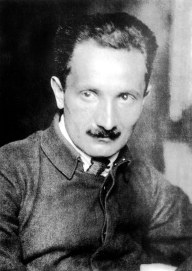 Martin Heidegger1889–1976 · PhenomenologyTook part in 1929
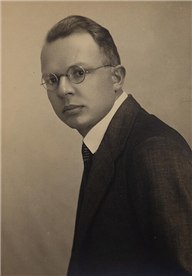 Rudolf Carnap1891–1970 · Logical PositivismTook part in 1929
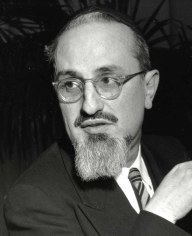 Joseph B. Soloveitchik1903–1993 · Rabbinic JudaismTook part in 1929
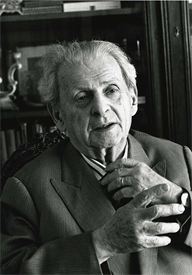 Emmanuel Levinas1906–1995 · PhenomenologyTook part in 1929
Where the circle leans
The average of its members on each scale where two or more of them have a position and they roughly agree. Left out because the members split: values: subjective or objective (Rudolf Carnap toward subjective, Emmanuel Levinas toward objective); reason or experience (Joseph B. Soloveitchik toward reason, Rudolf Carnap toward experience); the way to the highest: own effort, or grace (Joseph B. Soloveitchik toward one's own effort, Martin Heidegger toward grace); God: exists, or not (Joseph B. Soloveitchik toward God existing, Rudolf Carnap toward no God); method: logic and analysis, or lived experience (Rudolf Carnap toward logic and analysis, Martin Heidegger toward lived experience).
Side by side with you
Black dot: the circle, at the average of its members. Red ring: you.
On the maps
Each map puts two scales side by side. Each small square is a school, at its exact spot; its name shows where there is room. For the others, point at the square, or tap it once on a phone. Click a school, or tap it again, to open it.
Swipe sideways to see the whole chart.
Closest circles
Sources
Where the list of members comes from: the exact words on each page.
was an encounter between the philosophers Martin Heidegger and Ernst Cassirer from March 17 to April 6, 1929 during the Second Davos Hochschulkurs ( Davos University Conference )
wikipedia.orgCassirer gave four lectures and Heidegger gave three lectures
wikipedia.orgRudolf Carnap, Joseph B. Soloveitchik and Emmanuel Levinas (who later recalled that: ‘Young student could have had the impression that he was witness to the creation and the end of the world’), were also in the audience at Davos
wikipedia.org
And you, where do you stand?
Take the quiz and see your match with The Davos disputation and the other circles.
Take the quiz