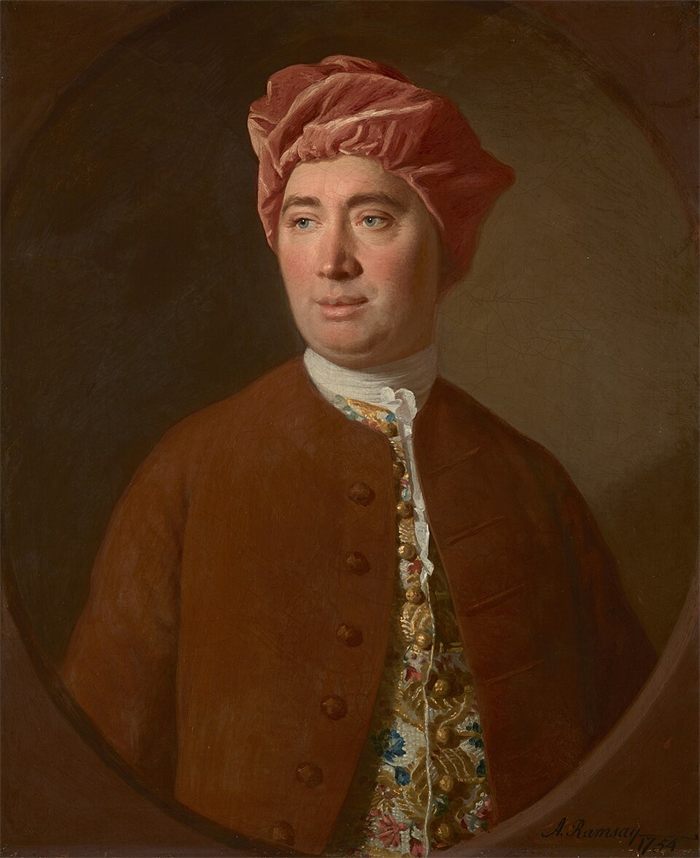
The author in one sentence
All my knowledge comes from experience, no argument can prove the future will be like the past, and reason serves my feelings and desires.
David Hume's view as we would sum it up in their voice. Our summary, not a quotation.
Where David Hume leans
Spirit or matterStrong · Matter
Spirit 25%Matter 75%
Facts: subjective or objectiveBalanced
Subjective 45%Objective 55%
Values: subjective or objectiveStrong · Subjective
Subjective 75%Objective 25%
Free will or determinismBalanced
Free will 50%Determinism 50%
Individual or collectiveBalanced
Individual 45%Collective 55%
Reason or experienceVery strong · Experience
Reason 5%Experience 95%
Inner life: real, or explained away by the brainLeaning · Mind explained away
Mind is real 40%Mind explained away 60%
Life: meaning, or none at allLeaning · No meaning at all
Life has meaning 35%No meaning at all 65%
Other minds: surely real, or only my own is sureStrong · Only my mind is sure
Others surely real 30%Only my mind is sure 70%
The good life: pleasure, or virtue and dutyLeaning · Pleasure is the good
Pleasure is the good 65%Virtue and duty 35%
What makes an act right: principles, or consequencesStrong · Consequences
Principles 20%Consequences 80%
God: exists, or notBalanced
God exists 50%No God 50%
Universals: real, or only particular thingsVery strong · Only particular things
Universals are real 10%Only particular things 90%
Method: logic and analysis, or lived experienceStrong · Logic and analysis
Logic and analysis 80%Lived experience 20%
Knowledge: we can know, or suspend judgmentStrong · Suspend judgment
We can know 25%Suspend judgment 75%

And you, where do you stand?
Take the quiz and see how close you are to David Hume.
Take the quiz