The two camps
Chalmers coined the terms “hard problem” and “easy problems” in a 1994 talk: the hard problem is explaining why certain mechanisms are accompanied by conscious experience. Nagel’s 1974 paper “What Is It Like to Be a Bat?”, which held that experiences are essentially subjective, is one of the main arguments that the problem exists. Some philosophers and neuroscientists, Koch among them, accept it; others, among them Dennett and Patricia Churchland, reject it and see it as a collection of easy problems that further study of the brain and behaviour will solve. Paul Churchland shares their materialist view, and Blackmore holds that the search for the brain’s correlates of consciousness rests on an erroneous belief in the hard problem.
In our words.
A. Those who see a hard problem
Placed at the average of these 4 people.
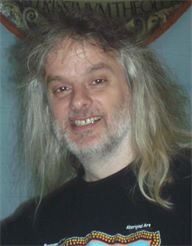 David Chalmersborn 1966
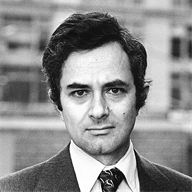 Thomas Nagelborn 1937
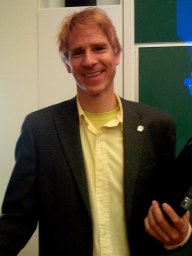 Christof Kochborn 1956
 Donald D. Hoffmanborn 1955
B. Those who deny it
Placed at the average of these 4 people.
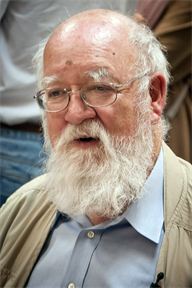 Daniel Dennett1942–2024
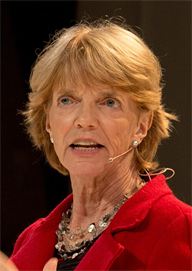 Patricia Churchlandborn 1943
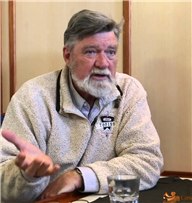 Paul Churchlandborn 1942
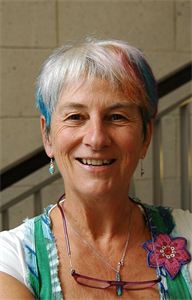 Susan Blackmoreborn 1951
Where they part ways
Each scale both camps have a position on, the biggest gap first.
Those who see a hard problemThose who deny it
The big letters are each camp's average; the small dots are its members (filled: Those who see a hard problem, open: Those who deny it). A camp whose members are far apart on a scale is marked split.
Your side
Take the quiz to see which camp you would have joined.
Sources
Where each camp comes from: the exact words on each page.
The terms ‘hard problem’ and ‘easy problems’ were coined by the philosopher David Chalmers in a 1994 talk
wikipedia.orgthe hard problem is the problem of explaining why certain mechanisms are accompanied by conscious experience
wikipedia.orgThe philosopher Thomas Nagel posited in his 1974 paper ‘What Is It Like to Be a Bat?’ that experiences are essentially subjective
wikipedia.orgthe main arguments for the existence of a hard problem- philosophical zombies, Mary’s room, and Nagel’s bats
wikipedia.orgIt has been accepted by some philosophers of mind such as Joseph Levine, Colin McGinn, and Ned Block and cognitive neuroscientists such as Francisco Varela, Giulio Tononi, and Christof Koch
wikipedia.orgits existence is rejected by other philosophers of mind, such as Daniel Dennett, Massimo Pigliucci, Thomas Metzinger, Patricia Churchland, and Keith Frankish
wikipedia.orgDaniel Dennett and Patricia Churchland, among others, believe that the hard problem is best seen as a collection of easy problems that will be solved through further analysis of the brain and behaviour
wikipedia.orgThinkers who subscribe to type-A materialism include Paul and Patricia Churchland, Daniel Dennett
wikipedia.orgPsychologist Susan Blackmore believes, by contrast, that the search for the neural correlates of consciousness is futile and itself predicated on an erroneous belief in the hard problem of consciousness
wikipedia.orgHoffman proposes a solution to the hard problem of consciousness by adopting the converse view that consciousness causes brain activity
wikipedia.org
And you, where do you stand?
Take the quiz and see which side of The hard problem of consciousness you are on.
Take the quiz