The two camps
Bohr and Heisenberg held that no physical property can be understood without an act of measurement. Einstein did not doubt that quantum mechanics gives correct predictions, but held that it could not be a complete theory. Bohr’s version became the prevalent view.
In our words.
A. The Copenhagen side
Placed at the average of these 2 people.
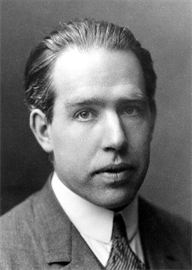 Niels Bohr1885–1962
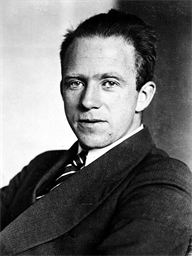 Werner Heisenberg1901–1976
B. Einstein’s side
Placed at the average of these 3 people.
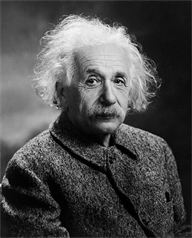 Albert Einstein1879–1955
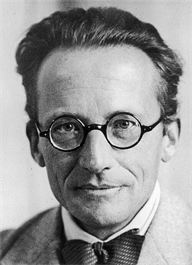 Erwin Schrödinger1887–1961
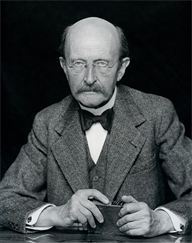 Max Planck1858–1947
Where they part ways
Each scale both camps have a position on, the biggest gap first.
The Copenhagen sideEinstein’s side
The big letters are each camp's average; the small dots are its members (filled: The Copenhagen side, open: Einstein’s side). A camp whose members are far apart on a scale is marked split.
Your side
Take the quiz to see which camp you would have joined.
Sources
Where each camp comes from: the exact words on each page.
The Bohr-Einstein debates were a series of public disputes about quantum mechanics between Albert Einstein and Niels Bohr
wikipedia.orgBohr and Heisenberg advanced the position that no physical property could be understood without an act of measurement, while Einstein refused to accept this
wikipedia.orgstemming from the work of Niels Bohr, Werner Heisenberg, Max Born, and others
wikipedia.orgEinstein was an early and persistent supporter of objective reality
wikipedia.orgWhile Einstein did not doubt that quantum mechanics was a correct physical theory in that it gave correct predictions, he maintained that it could not be a complete theory
wikipedia.orgwhich was intended to show that physical properties like position and momentum have values even if not measured
wikipedia.orgIn 1935 Einstein, Boris Podolsky and Nathan Rosen developed an argument
wikipedia.orgMax Born, collaborating with Heisenberg, proposed that mechanics were to be understood as a probability without any causal explanation
wikipedia.orgBoth Einstein and Schrödinger rejected Born’s interpretation, with its renunciation of causality
wikipedia.orgThe quantum revolution of the mid-1920s
wikipedia.orgthe outcome of Bohr’s version of quantum mechanics becoming the prevalent view
wikipedia.orgBohr and Einstein maintained a mutual admiration that was to last the rest of their lives
wikipedia.orghad worked out the Copenhagen interpretation of quantum mechanics, but it was rejected by Planck, and by Schrödinger, Laue, and Einstein as well
wikipedia.org
And you, where do you stand?
Take the quiz and see which side of The Bohr–Einstein debates you are on.
Take the quiz