The two camps
The rift began when Marx answered Proudhon’s 1846 The Philosophy of Poverty with The Poverty of Philosophy, and Bakunin’s followers carried it into the First International. There Marx and Engels battled the anarchist faction led by Bakunin: Marx argued for using the state to bring about socialism, and in 1872 Engels argued that some authority was inevitable even after a socialist revolution. Bakunin wanted the state replaced by federations of self-governing workplaces and communes, and argued that Marxist states would be one-party dictatorships ruling over the working class. The 1872 Hague Congress expelled Bakunin. That year Kropotkin fell out with a Marxist group in Geneva and met the Jura Federation, the main opposition to the Marxist-run International; he held that any central authority was incompatible with a social revolution.
In our words.
A. The Marxists
Placed at the average of these 2 people. Their school on this site: Marxism.
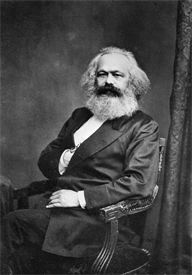 Karl Marx1818–1883
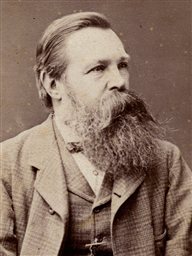 Friedrich Engels1820–1895
B. The anarchists
Placed at the average of these 3 people.
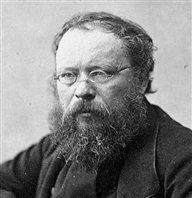 Pierre-Joseph Proudhon1809–1865
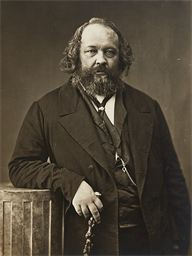 Mikhail Bakunin1814–1876
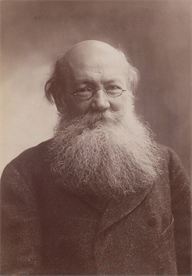 Peter Kropotkin1842–1921
Where they part ways
Each scale both camps have a position on, the biggest gap first.
The MarxistsThe anarchists
The big letters are each camp's average; the small dots are its members (filled: The Marxists, open: The anarchists). A camp whose members are far apart on a scale is marked split.
Your side
Take the quiz to see which camp you would have joined.
Sources
Where each camp comes from: the exact words on each page.
In 1846, he published the Système des contradictions économiques ou Philosophie de la misère
wikipedia.orgwhich prompted a book-length critique from Karl Marx entitled The Poverty of Philosophy, commencing a rift between anarchism and Marxism and anarchists and Marxists that would be continued by the Bakuninists
wikipedia.orgIn their letters, Proudhon expressed disagreement with Marx’s views on revolution
wikipedia.orgin which he battled the influence of anarchists led by Mikhail Bakunin
wikipedia.orgEngels played a key role in the International’s internal struggles, particularly the bitter conflict with the anarchist faction led by Mikhail Bakunin
wikipedia.orgIn his 1872 article ‘On Authority’, Engels argued against the anarchists that a degree of subordination and authority was inevitable, particularly in large-scale industry, even after a socialist revolution
wikipedia.orgleading to Bakunin’s expulsion at the Hague Congress in 1872
wikipedia.orgThe 1872 Hague Congress was dominated by a struggle between Bakunin and Marx, who was a key figure in the General Council of the International and argued for the use of the state to bring about socialism
wikipedia.orgIn contrast, Bakunin and the anarchist faction argued for the replacement of the state by federations of self-governing workplaces and communes
wikipedia.orgarguing that Marxist states would be one-party dictatorships ruling over the proletariat, not ruled by the proletariat
wikipedia.orgKropotkin set out to see Switzerland and Western Europe in February 1872
wikipedia.orgworked and fell out with Nikolai Utin’s Marxist group in Geneva, and was introduced to the Jura Federation
wikipedia.orgThe Jura were the main internal opposition to the Marxist-controlled First International
wikipedia.orgarguing that any central authority was incompatible with the dramatic changes needed by a social revolution
wikipedia.org
And you, where do you stand?
Take the quiz and see which side of Marxists or anarchists you are on.
Take the quiz