5 members on this site
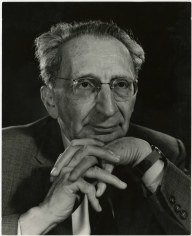
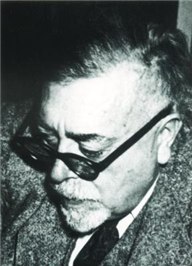 Norbert Wiener1894–1964Took parta member or guest at the 1946–1953 meetings
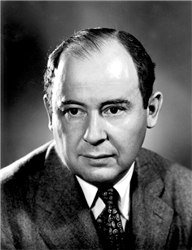 John von Neumann1903–1957Took part 1946–1953attended at least one of the 1946-1953 meetings
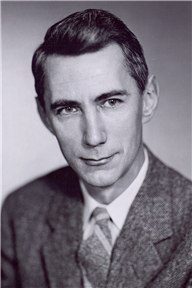 Claude Shannon1916–2001 · MechanismTook part 1946–1953attended at least one of the 1946-1953 meetings
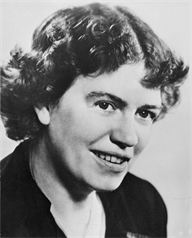 Margaret Mead1901–1978 · Moral RelativismTook part 1946–1953attended at least one of the 1946-1953 meetings
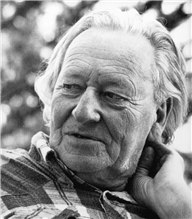 Gregory Bateson1904–1980Took partone of the original core group
Where the circle leans
Spirit or matterLeaning · Matter
Spirit 36%Matter 64%
Facts: subjective or objectiveLeaning · Objective
Subjective 37%Objective 63%
Values: subjective or objectiveLeaning · Subjective
Subjective 67%Objective 33%
Reason or experienceStrong · Experience
Reason 20%Experience 80%
Inner life: real, or explained away by the brainLeaning · Mind explained away
Mind is real 36%Mind explained away 64%
Life: meaning, or none at allLeaning · Life has meaning
Life has meaning 65%No meaning at all 35%
Technology: speed it up, or hold it backBalanced
Speed it up 55%Hold it back 45%
The average of its members on each scale where two or more of them have a position and they roughly agree. Left out because the members split: God: exists, or not (John von Neumann toward God existing, Gregory Bateson toward no God).
Side by side with you
Black dot: the circle, at the average of its members. Red ring: you.
On the maps
Each map puts two scales side by side. Each small square is a school, at its exact spot; its name shows where there is room. For the others, point at the square, or tap it once on a phone. Click a school, or tap it again, to open it.
Swipe sideways to see the whole chart.
Closest circles
Sources
Where the list of members comes from: the exact words on each page.
were a set of meetings of scholars from various academic disciplines held in New York under the direction of Frank Fremont-Smith at the Josiah Macy Jr. Foundation
wikipedia.orgThe conferences aimed to promote communication across scientific disciplines and restore unity to science
wikipedia.orgFirst Cybernetics Conference, 8–9 March 1946. Titled ‘Feedback Mechanisms and Circular Causal Systems in Biological and Social Systems’
wikipedia.orgTenth Cybernetics Conference, 22–24 April 1953
wikipedia.orgThese were one of the first organized studies of interdisciplinarity, spawning breakthroughs in systems theory, cybernetics, and what later became known as cognitive science
wikipedia.orgParticipants: (as members or guests) in at least one of the Cybernetics conferences: Harold Alexander Abramson, Ackerman, Vahe E. Amassian, William Ross Ashby, Yehoshua Bar-Hillel, Gregory Bateson
wikipedia.orgClaude Shannon, one of the attendees
wikipedia.orgWarren S. McCulloch, Turner McLardy, Margaret Mead
wikipedia.orgJohn von Neumann, Heinz Werner, Norbert Wiener
wikipedia.org
And you, where do you stand?
Take the quiz and see your match with The Macy conferences on cybernetics and the other circles.
Take the quiz