13 members on this site
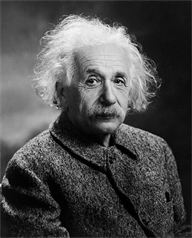 Albert Einstein1879–1955 · SpinozismThere from 1933 · until death
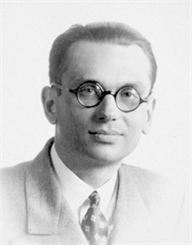 Kurt Gödel1906–1978 · PlatonismThere from 1933 · end not recorded
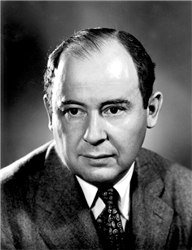 John von Neumann1903–1957There from 1933 · end not recorded
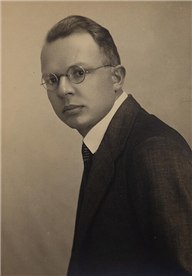 Rudolf Carnap1891–1970 · Logical PositivismThere 1952–1954
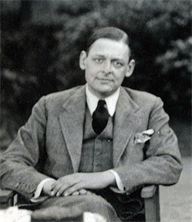 T. S. Eliot1888–1965 · ConservatismYears not recorded
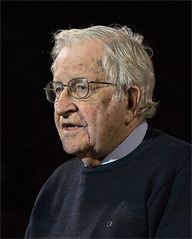 Noam Chomskyborn 1928 · RationalismThere 1958–1959
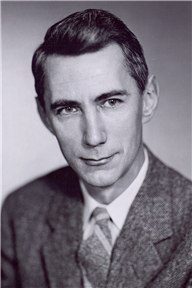 Claude Shannon1916–2001 · MechanismThere in 1940
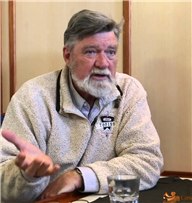 Paul Churchlandborn 1942 · Eliminative MaterialismYears not recorded
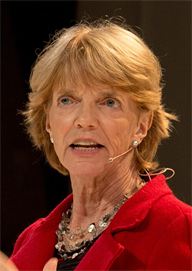 Patricia Churchlandborn 1943 · Eliminative MaterialismThere 1982–1983
 Reinhold Niebuhr1892–1971 · Neo-orthodoxyYears not recorded
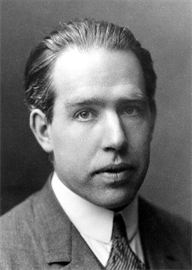 Niels Bohr1885–1962Years not recorded
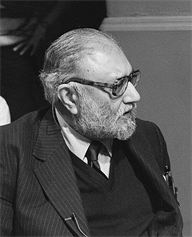 Abdus Salam1926–1996Years not recorded
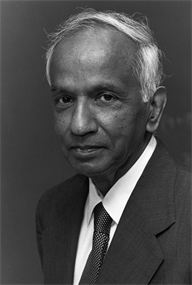 Subrahmanyan Chandrasekhar1910–1995Years not recorded
Where the circle leans
The average of its members on each scale where two or more of them have a position and they roughly agree. Left out because the members split: spirit or matter (T. S. Eliot toward spirit, Patricia Churchland toward matter); values: subjective or objective (Rudolf Carnap toward subjective, T. S. Eliot toward objective); free will or determinism (Noam Chomsky toward free will, Albert Einstein toward determinism); reason or experience (Kurt Gödel toward reason, Rudolf Carnap toward experience); separate from the highest, or one with it (T. S. Eliot toward being separate, Albert Einstein toward all being one); inner life: real, or explained away by the brain (Kurt Gödel toward the mind being real, Paul Churchland toward the mind being explained away); the way to the highest: own effort, or grace (Kurt Gödel toward one's own effort, Reinhold Niebuhr toward grace); God: exists, or not (T. S. Eliot toward God existing, Subrahmanyan Chandrasekhar toward no God); universals: real, or only particular things (Kurt Gödel toward universals being real, Rudolf Carnap toward only particular things existing).
Side by side with you
Black dot: the circle, at the average of its members. Red ring: you.
On the maps
Each map puts two scales side by side. Each small square is a school, at its exact spot; its name shows where there is room. For the others, point at the square, or tap it once on a phone. Click a school, or tap it again, to open it.
Swipe sideways to see the whole chart.
Closest circles
Sources
Where the list of members comes from: the exact words on each page.
is a center for theoretical research and intellectual inquiry
wikipedia.orglocated in Princeton, New Jersey
wikipedia.orgIt was founded in 1930 by American educator Abraham Flexner
wikipedia.orgthe IAS became the key lifeline for scholars fleeing Europe
wikipedia.orgEinstein was Flexner’s first coup
wikipedia.orgIt has served as the academic home of internationally preeminent scholars, including Albert Einstein, J. Robert Oppenheimer, Emmy Noether, Hermann Weyl, John von Neumann, Michael Walzer, Clifford Geertz, Freeman Dyson and Kurt Gödel
wikipedia.orgthe IAS machine built in the basement of the Fuld Hall from 1942 to 1951 under von Neumann’s direction introduced the basic architecture of most modern digital computers
wikipedia.orgAfter a stint at the Institute for Advanced Study in Princeton (1952-1954)
wikipedia.orgEliot wrote The Cocktail Party while he was a visiting scholar at the Institute for Advanced Study
wikipedia.orgFrom 1958 to 1959 Chomsky was a National Science Foundation fellow at the Institute for Advanced Study
wikipedia.orgIn 1940, Shannon became a National Research Fellow at the Institute for Advanced Study in Princeton
wikipedia.orgHe spent a year at the Institute for Advanced Study in Princeton
wikipedia.orgFrom 1982 to 1983 she was a Visiting Member in Social Science at the Institute for Advanced Study in Princeton
wikipedia.orgalso spent time at the Institute for Advanced Study at Princeton
wikipedia.orgInstitute for Advanced Study visiting scholars
wikipedia.orgInstitute for Advanced Study visiting scholars
wikipedia.orgInstitute for Advanced Study visiting scholars
wikipedia.org
And you, where do you stand?
Take the quiz and see your match with The Institute for Advanced Study and the other circles.
Take the quiz